The $400,000 Problem Hiding on Page 47 of a $10M Home.
I have sat in enough construction meetings to know that most major budget problems do not start with a $400,000 mistake.
They usually start with a sentence nobody paid much attention to.
On a $10 million home, that sentence might be buried deep inside a contract or an approved change order. It can quietly move a responsibility from the contractor to the owner. At first, it may look like a small detail. Nobody stops the project over it. Everyone moves on.
Take HVAC rough-in tolerances. A responsibility that once belonged to the contractor can become the owner's responsibility through a change in the contract language. The cost may not seem important at the time, especially when the rest of the project is moving forward.
Then the other trades build around it.
Framing is complete. Mechanical work moves forward. Electrical is installed. Finishes begin. By the time the issue is found, several trades have already built around the original condition.
What could have been a $30,000 correction can suddenly become a $400,000 problem.
Not because the original issue was worth $400,000.
Because everything around it now has to change too.
The Problem Usually Starts Before Construction.
When a major project goes over budget, the first reaction is often to look at the contractor.
Sometimes that is fair. Contractors can make mistakes, miss details, or underestimate work.
But I have seen plenty of projects where the bigger problem started much earlier, when the owner approved something they did not fully understand.
Construction contracts are long for a reason. They cover scope, exclusions, allowances, schedules, responsibilities, insurance, payments, change orders, and many other details that can affect the project later.
Most property owners are not expected to understand every construction term. That is exactly why these details need to be reviewed carefully before the project gets too far down the road.
The Owner Is Usually the Least Protected Person in the Room.
On a large project, everyone has a role.
The architect is responsible for the design and the services outlined in their agreement. The contractor is responsible for building the project and protecting their company. The subcontractors are focused on their specific trades. Attorneys may review the legal side of the documents.
The owner is the one writing the checks and carrying the financial risk.
Yet the owner is often the person with the least day-to-day involvement in the details that can create that risk.
That creates a gap.
It does not mean the architect or contractor is doing something wrong. Their responsibilities are simply different from the owner's.
A contractor has to protect the contractor's business. An architect has to protect the design and perform the services they agreed to provide. The owner needs someone focused on the owner's money, schedule, risk, and long-term goals.
Those interests can overlap, but they are not always the same.
A Change Order Is More Than a Price Increase.
This is where I think many owners miss the bigger issue.
When a change order comes across the table, the first question is usually, "How much does this cost?"
That matters, but it is not the first question I would ask.
I would ask, "Why did this become our responsibility?"
Then I would ask, "What changed from the original agreement?"
And finally, "What does this change affect somewhere else in the project?"
A change order can do much more than increase the contract price. It can change who carries the risk. It can change who is responsible for coordination. It can change the sequence of the work.
A small change in one trade can also create costs in three or four other trades.
That is where owners get surprised.
The Trades Are Connected.
This is one of the most important things to understand about a major construction project.
The trades do not work in separate boxes.
A change to an HVAC layout can affect framing. Framing can affect drywall. Drywall can affect millwork. Millwork can affect finishes.
That means the cost of a problem is not always the cost of fixing the original problem.
You may also have to remove finished work, move other systems, bring trades back to the site, order new materials, and extend the schedule.
This is why finding an issue early can save so much money.
The earlier you catch it, the fewer things have been built around it.
The Contract Is Part of the Construction.
A lot of owners think construction starts when the crews arrive on site.
It actually starts much earlier.
The contract establishes responsibilities. The drawings define the design. The specifications define materials and standards. The schedule sets the sequence. The change order process determines how new costs are handled.
Those documents are not paperwork sitting on the side of the project.
They are part of the project.
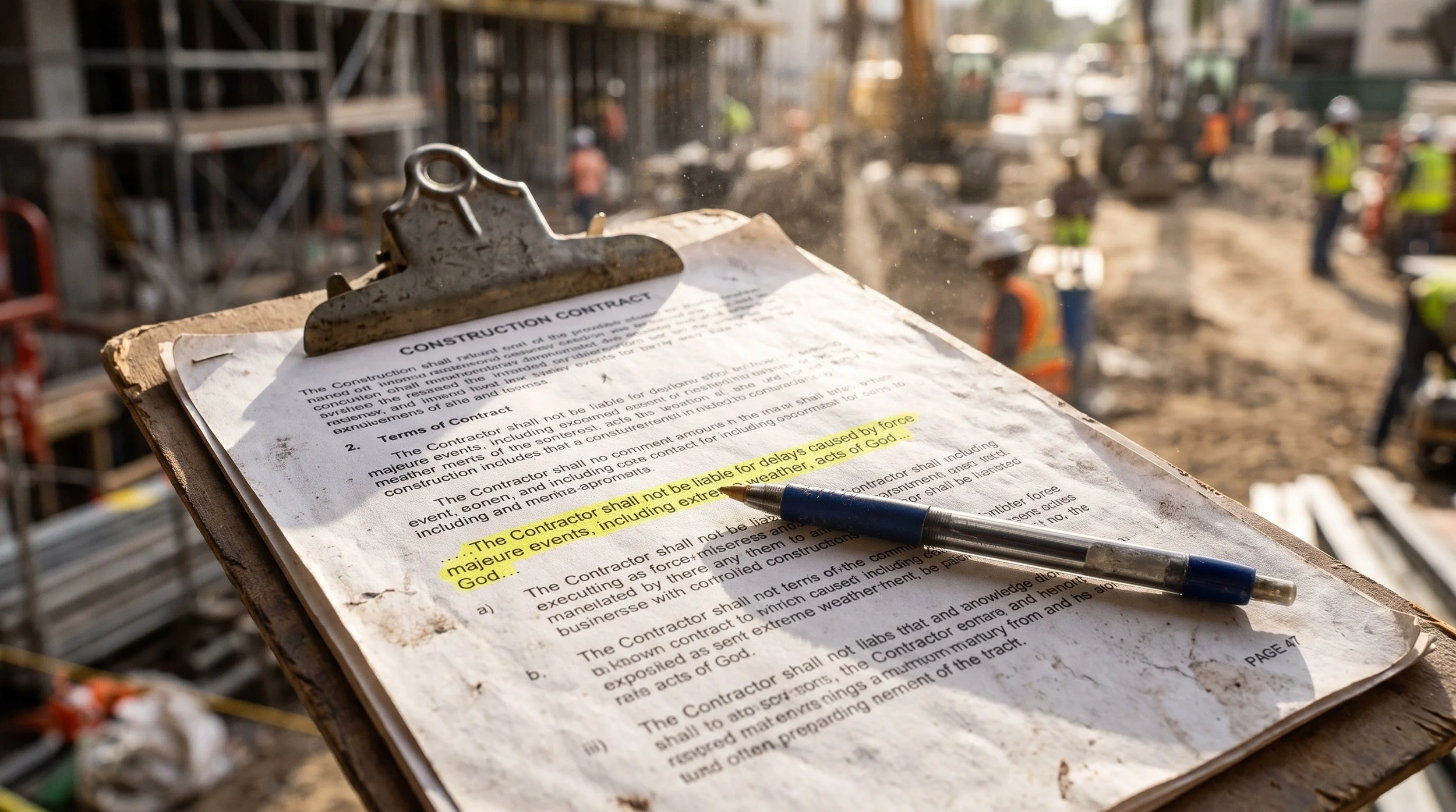
If a responsibility changes on page 47, that change can eventually affect what happens on the job site.
This Is Where Owner Representation Matters.
On larger residential projects, I believe the owner needs someone who understands both the construction and the business side of the project.
Not someone whose job is simply to attend more meetings.
Someone who can look at a change and ask the questions that may not get asked otherwise.
Why is this changing? Who is responsible now? What does this affect? What happens to the other trades? Does this change the schedule? What will the real cost be once everything is included?
Those questions can sound simple.
On a $10 million project, they are not.
The right person in the room can catch a problem while it is still a conversation instead of discovering it after the work is already finished.
Read Page 47 Before You Need Page 47.

The most expensive part of a construction problem is often not the original mistake.
It is discovering the mistake after everyone has built around it.
I have seen owners spend enormous amounts of money correcting decisions that looked small when they were first approved. The number on the change order may have seemed manageable. The real cost appeared later, when that decision started affecting other trades, the schedule, and finished work.
That is why I always tell property owners to look beyond the headline number.
Read the scope. Read the exclusions. Read the responsibility sections. Read the change order language. And when something changes, understand exactly what that change means before signing it.
A $10 million project does not go over budget because of one page in a contract. It goes over budget when nobody stops to ask what that page really means.