Why Your Renovation Budget Blew Up: 7 Hidden Cost Drivers in High End Remodels
I have spent more than 20 years managing high-end homes across the Bay Area. Custom homes, big renovations, full estate projects. In that time, I have seen almost every version of the same story.
A homeowner starts with a clear number in mind. Six months later, the number is 30% higher, sometimes more. Nobody stole the money. Nobody lied on purpose. The budget just grew, piece by piece, until it didn't look like the original plan anymore.
This happens more than people think. Surveys of homeowners show that more than a third go over their planned budget, and almost half go over by at least $5,000. On high-end projects, the dollar amounts are just bigger.
So I want to walk you through the real reasons this happens. Not the obvious ones like "materials cost money." The reasons that quietly add tens of thousands of dollars before anyone notices.
1. The Scope Was Never Fully Written Down.
This is the number one reason, and it has nothing to do with construction. It's paperwork.
Most projects start with a rough idea. "Renovate the kitchen and add a primary suite." That sounds like a plan, but it is not a scope. A real scope lists every material, every fixture, every finish, and every task, in writing, before anyone picks up a tool.
When the scope is vague, everyone fills in the blanks differently. You picture a marble island. Your contractor priced in quartz. Nobody lied. Nobody checked. The gap becomes a change order, and change orders are where budgets quietly bleed out.
What helps: Do not start construction until the design, the materials, and the full scope of work are locked in writing. If it is not on paper, it is not agreed.
2. What's Behind the Walls Nobody Can See.
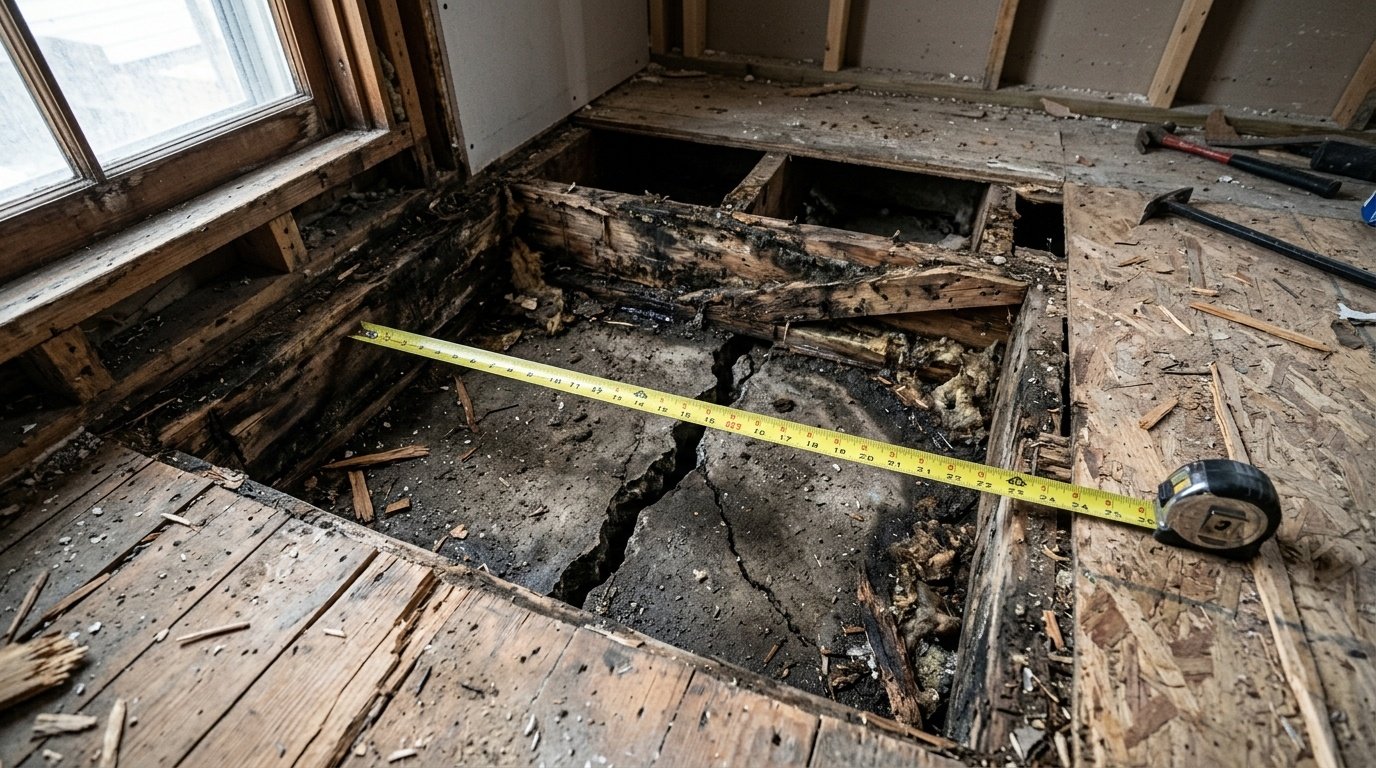
Here is the one hidden cost that even the best planning cannot fully remove: what's inside the walls, floors, and foundation before anyone opens them up.
Older homes, especially the kind common across the Bay Area, often hide:
Wiring that doesn't meet current code
Plumbing that is failing but not visibly leaking yet
Water damage or mold behind drywall
Foundation cracks or settling
Lead paint, common in homes built before 1978
You cannot see any of this until demolition starts. That is exactly why a serious project always sets aside a contingency, usually 10 to 20% of the budget, specifically for what's found once the walls come open. The older the home, the bigger that reserve should be.
3. Mid-Project Decisions.
This one is human nature, and I say that with zero judgment. You are three weeks into construction, you see the space taking shape, and suddenly you want double-hung windows instead of single-hung, or you decide the shower needs to move two feet to the left.
Small changes like this do not stay small. Moving a shower means moving plumbing, which means opening a wall that was already closed, which means new drywall, new tile, and new labor hours. A single mid-project change can turn a 12-week job into a 20-week job, at a real added cost.
What helps: Make your big decisions before construction starts, not during it. If a change is important enough to make, get the added cost in writing before the crew touches anything.
4. Upgrading Materials Once You See the Space.
This is different from a design change. This is simply falling in love with something more expensive once you can picture it in the real space.
You budgeted for porcelain tile. You see natural stone in the showroom and it's beautiful. You upgrade. Multiply that decision across countertops, cabinetry, lighting, hardware, and flooring, and the "small upgrades" add up to a very large number by the end.
This is not a mistake. It is a normal part of building something you will live in for decades. The only real fix is knowing it will happen and building room for it into the budget from day one, instead of being surprised by it at the end.
5. Permits and Approvals Take Longer Than Anyone Expects.
Every major project needs sign-off. Structural changes, additions, electrical and plumbing work, and sometimes zoning or historic review, especially depending on which city or county your home sits in.
The Bay Area has some of the most detailed and layered permitting processes in the country. City-by-city, the rules, timelines, and required approvals are all different. When a project stalls waiting for a permit, you are still paying for a project manager, held labor, and sometimes rented equipment sitting idle. Delays are not free. They are just a cost that shows up as time instead of a line item.
What helps: Get someone who knows the specific city's permitting process reviewing your plans before submission, not after a rejection.
6. Where You'll Actually Live During Construction.

This is one people forget to put in the budget at all.
If your kitchen is gone for two to three months, you are eating out, ordering in, or running a temporary setup. If a full renovation forces you out of the home, you are paying rent or a hotel bill on top of your mortgage. For a project that runs several months, this can add up to thousands of dollars that never appear on the construction invoice, but absolutely came out of your pocket.
7. Communication Gaps Between Everyone Involved.
A high-end remodel usually involves an architect, a general contractor, subcontractors, a designer, and the homeowner. That is a lot of people who all need to be working from the same understanding, at the same time.
When the architect assumes one thing, the contractor prices another, and the homeowner expects a third, the result is not usually a fight. It is usually a quiet, expensive gap that turns into a change order weeks later. The more people involved, the more this becomes true.
This is really the root cause behind most of the six reasons above. Almost every overrun traces back to two or more people not being aligned on the same plan, at the same time, in writing.
The Real Takeaway.
Nearly all of these overruns, except for what's hiding behind the walls, are decisions that could have been made and priced before construction ever started. That is the part worth sitting with. A renovation budget rarely blows up because of one big disaster. It blows up one small, reasonable decision at a time, made without knowing the full cost until later.
If there is one thing 20 years in this business has taught me, it is this: the projects that stay on budget are not the lucky ones. They are the ones where every decision was made on paper, before the crew ever walked in the door.